The United Kingdom ranks as the sixth-largest national economy by nominal gross domestic product (GDP), tenth-largest by purchasing power parity (PPP), and twenty-second by nominal GDP per capita, accounting for approximately 3.1% of global nominal GDP. Despite this national wealth, official and charitable estimates indicate that over 300,000 individuals experience homelessness in England alone, with thousands more affected across Scotland, Wales, and Northern Ireland.
I. Defining Homelessness and Key Drivers
Homelessness encompasses a broad spectrum of housing deprivation, ranging from rough sleeping to residency in temporary accommodation, hostels, and shelters.
Primary catalysts for homelessness include:
Economic Pressures: Evictions resulting from rental affordability gaps and income shocks.
Domestic Disruption: Relationship breakdowns, family dissolution, and untreated physical or mental health conditions.
Institutional Transitions: Individuals leaving the criminal justice system, care facilities, or military service without immediate transitional housing.
The Administrative Barrier
Individuals experiencing homelessness often face systemic hurdles, such as lacking a fixed address required to open bank accounts, claim statutory benefits, or receive essential correspondence. While day centers and local charities assist, provisions vary regionally, and administrative delays can result in missed housing opportunities.
II. Upstream Prevention and the Role of Universal Credit
Effective policy must focus on upstream prevention to stop individuals from losing their homes initially.
The Function of Universal Credit: Statutory safety nets like Universal Credit are designed to provide financial cushioning against sudden income shocks. When paired with proactive emergency discretionary payments and tenancy mediation services, they help prevent avoidable evictions.
Temporary Micro-Accommodation as a Safety Net: When preventive measures fail and individuals experience acute housing loss, modular, student-style temporary accommodation serves as a short-term, functional bridge. It provides an immediate, secure environment while clients transition back toward independence.
III. Evaluating the Social Housing Deficit and Evidence-Based Models
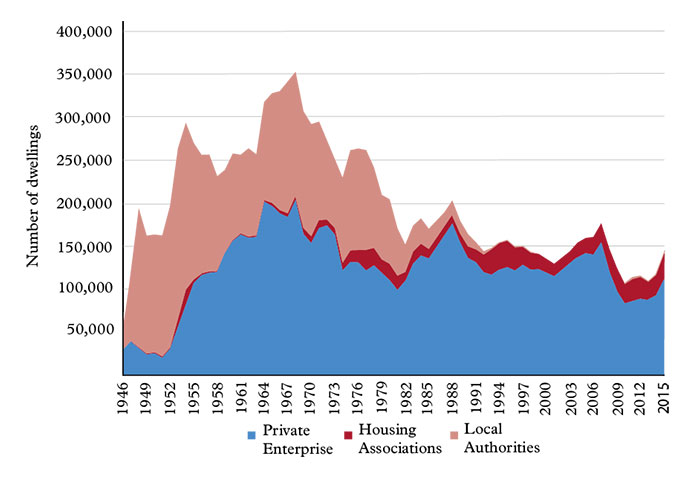
Population growth and rising life expectancy have increased demand for affordable housing, exposing long-term vulnerabilities in the UK’s housing infrastructure.
The Impact of Right to Buy
Introduced via the Housing Act 1980, the "Right to Buy" policy enabled council tenants to purchase their properties at a discount. While intended to promote homeownership, housing analysts note that it significantly depleted the national inventory of social housing. Furthermore, local authorities were historically restricted from fully reinvesting capital receipts into new construction at an equivalent replacement rate, contributing to long-term supply shortages.
Tenancy Transitions and the "Housing First" Framework
A central debate in social housing policy is whether tenancies should be permanent or transitional. Because social housing is intended to function as a temporary safety net, households whose financial circumstances improve should transition into private renting or homeownership, freeing up properties for individuals in high-priority need.
To address chronically vulnerable populations, some models look to the "Housing First" evidence-based approach. This framework pairs permanent accommodation with immediate, wraparound support services (such as mental health and addiction treatment) to ensure that individuals with complex needs achieve stability.
To safeguard against system exploitation and ensure fairness:
Income-Graduated Rent: Adjusting rental rates incrementally as household income stabilizes, up to a capped threshold that encourages eventual transition to the private market.
Mandatory Savings Mechanisms: Requiring a percentage of household income to be placed into structured savings accounts or government bonds to build capital for future housing deposits.
Conditionality and Support: Pairing housing assistance with mandatory employment-support programs, training, or community engagement initiatives for able-bodied individuals who are long-term unemployed.

IV. Structural Solutions and Alternative Models
Addressing chronic housing shortages requires evaluating high-density and alternative infrastructure models both in the UK and internationally:
High-Density Modular Housing: Drawing inspiration from space-efficient urban housing models globally, such as modular apartment complexes, planners can maximize land use to provide secure, functional micro-accommodation as an immediate bridge away from rough sleeping.
Mixed-Use Communities: Integrating essential services—such as localized healthcare clinics, nurseries, and retail kiosks—directly into residential complexes can foster local employment and streamline access to amenities.
Regional Cooperative Projects: Developing state-backed regional or rural residential projects linked to agricultural or light industrial cooperatives offers alternative pathways for individuals seeking structured employment and community rehabilitation.
V. Conclusion
Homelessness remains a multifaceted socio-economic challenge requiring coordinated infrastructure investment. By strengthening upstream prevention through Universal Credit, optimizing temporary micro-accommodation, reforming social housing turnover through equitable review frameworks, and exploring innovative high-density construction models, policymakers can work toward reducing rough sleeping and stabilizing the national housing market.
